Migraine



OverviewMigraine overview
Migraine is a neurological disease that can cause severe, debilitating pain as well as many other symptoms. It is much more than a simple headache.
Migraines involve recurrent attacks of mild to severe pain on one side of the head. Other symptoms may include:
- Nausea
- Vomiting
- Increased sensitivity to light
- Visual hallucinations, often flashing lights
Some sufferers may find that certain triggers bring on migraines. It is important that you consult your doctor to determine the causes and triggers of your migraine.
What is a Migraine?
A migraine is most recognised as an intense localised headache.
You may feel severe pain in the side or front of your head. Other migraine symptoms include nausea, sensitivity to light and sound, and visual, auditory or olfactory hallucinations.
Around 20% of women and 10% of men in the UK suffer from migraines.
It is believed that migraine can be hereditary. They can last from 4 hours to 3 days. Most migraine sufferers experience frequent migraine attacks.
How To Prevent Migraines
Migraines can be very disruptive. However, there are several steps you can take to minimise the effect they have on your life.
First, you should discuss your migraine with your doctor. They can help put together a proper management and treatment plan.
To minimise migraines you should also:
- Ensure you get enough sleep. Try to establish a consistent pattern of sleep and avoid screen time before sleep.
- Keep a food diary. Many people find that some foods trigger migraines. These should be identified and avoided.
- Regular exercise can reduce stress as well as helping to regulate your sleeping and eating patterns.
Living with Migraines: Management and Support
A migraine diary can also help with managing migraines.
This can make it easier to recognise triggers, such as:
- A change in sleeping patterns or a lack of sleep
- Emotional stress
- Caffeine withdrawal
- Too much caffeine
- Too much alcohol
- Physical stress
- Smoking
Some people find that relaxation techniques reduce the severity and frequency of migraine attacks. Popular techniques include:
- Yoga
- Meditation
- Biofeedback
- Cognitive behaviour therapy (CBT)
There are also support groups and organisations that help migraine sufferers.
Offering or receiving support can help reduce stress and also gives you an opportunity to learn tips from other migraine sufferers.
How Our Service Can Help
At Online Mens Clinic, we provide triptans and OTC painkillers which provide effective migraine relief.
You simply need to complete a quick online consultation. An Online Mens Clinic pharmacist then approves the consultation, and we will use this to determine the best medication for your migraine.
Your treatment will then be shipped to you quickly and securely, usually within 24 hours.
Contact Information and Next Steps
At Online Mens Clinic, a short assessment needs to be completed before we can issue medication. This consultation helps to ensure that the medication issued is the most appropriate for you.
Start your online consultation now by clicking on the button at the top of the page.
Treatments
Treatment Options for Migraine
There is no cure for migraines; however, effective treatment and management options exist. Migraine treatment can range from prescription treatments to over-the-counter painkillers and anti-inflammatories. Your doctor will recommend a personalised treatment plan based on the severity, frequency, and associated symptoms of your migraine attacks. The goal will be to treat migraine symptoms right away and prevent it from progressing.
Over-the-counter (OTC) painkillers
OTC painkillers do not require a prescription and include paracetamol, aspirin, or ibuprofen. If taken early enough, these painkillers may help relieve the headache phase symptoms. If taken too often, they may worsen or trigger migraines.
Prescription medication
If your doctor has diagnosed you with migraines that cannot be managed with OTC painkillers, they will more than likely prescribe you a drug class called Triptans. Triptans act as antimigraine agents by binding to serotonin receptors. This leads to the blood vessels in the brain narrowing, which, during the migraine, have become wide.
What triptans are available through Online Mens Clinic?
Migraine relief tablets
- Zomig 2.5mg tablets
- Rizatriptan 10mg tablets
- Almotriptan 12.5mg tablets
- Migraitan 50mg tablets
- Sumatriptan tablets (50mg, 100mg)
- Vydura 75mg tablets
Nasal spray
Orodispersible
While triptans are the same drug class, they have differences, such as dosage, drug interactions, tolerability, and how long they take to work. Consult with a doctor or pharmacist about which medication is best for you and your symptoms.
Other medications that can be taken to help relieve the symptoms of a migraine attack include Antiemetic (anti-sickness) medications that may help combat associated symptoms such as nausea. Your local pharmacy may also stock Migraleve, which is a combination tablet. This medication has a pain killer as well as an anti-emetic to help combat a migraine attack.
It is essential to understand that OTC or prescription migraine medications do not prevent a migraine attack, but if taken as soon as symptoms present, they may be effective in providing relief.
As with any medication, it is important to tell your doctor or pharmacist about any persistent side effects, if you are allergic to any ingredient in the medication, or if you are pregnant, breastfeeding, or planning to become pregnant. Never mix medications, and always take them as your doctor or pharmacist prescribes.
Causes
Causes and Triggers of Migraines
It is thought that migraines are caused by abnormal brain activity that affects blood vessels, nerve signals, and chemical transmitters in the brain. What causes the abnormal brain activity is not fully understood. It is also thought that a genetic aspect makes an individual susceptible to certain triggers.
Several factors can increase an individual's chance of having a migraine attack. Triggers of migraine attacks vary from person to person and may include:
- Low blood sugar
- Sudden changes in environment or weather
- Stress
- Emotion
- Motion sickness
- Tobacco
- Depression
- Anxiety
- Hormonal changes
- Overexertion
- Fumes or strong smells
- Not enough or too much sleep
- Head trauma
- Some medications
- Hangover
- Skipped meals
- Flashing or bright lights
Diagnosing Migraines
Diagnosing a migraine is difficult as there is no specific test. A diagnosis is made after a medical consultation with a doctor based on the severity and pattern of headaches, associated symptoms, and response to treatment.
To help accurately diagnose an individual's migraine attack, it is helpful to record symptoms and time frames in a migraine diary. To ensure accurate recordings, a migraine diary should include:
- Date and time of the migraine attack
- Where you were and what you were doing at the time
- If there are any known or potential triggers
- Which migraine phase(s) experienced
- Symptoms
- If you took any medication, and if you did, was it effective?
- Anything that may be helpful, such as side effects from medication, menstrual cycle, changes in medication, etc.
A doctor can use the information recorded in a migraine diary to make a diagnosis, help identify triggers and warning signs, show patterns of attack, and determine if treatment is effective.
Symptoms
Understanding Migraines: Symptoms and Types
Different types of migraines cause different symptoms, with symptoms only occurring during different phases of a migraine. Symptoms may range in severity depending on their cause and the individual.
The most common symptoms of a migraine attack include the following:
- Nausea
- Throbbing or pulsing headache
- Sensitivity to noise, light or smell
- Vomiting
- Lethargy
To understand and help manage the symptoms of a migraine, it is necessary to understand their four distinct phases. At the same time, not everyone may experience each stage of a migraine.
Prodrome
Also known as a preheadache or premonitory phase, it can signify the start of a migraine attack. This phase may last several hours or, for some, occur over several days. Most individuals with a migraine will experience this phase; however, prodrome may not occur before every migraine attack. Specific mental and physical changes may include feeling tired, neck stiffness, passing more urine, food cravings, excessive yawning, changes in mood, and feeling thirsty.
Aura
Up to one-third of individuals who suffer from migraines experience aura as a significant phase in their migraine attack progression. This phase doesn’t necessarily occur during every migraine attack. The aura phase of a migraine attack includes a wide range of neurological symptoms, such as:
- Hearing and speech changes
- Vertigo or dizziness
- Pins and needles or numbness
- Changes in sight (dark spots, coloured spots, zigzag lines, or stars)
- Weakness
Aura is caused by a wave of nerve activity that spreads over the brain (cortical spreading depression). As the nerve activity spreads, the nerves behave abnormally, causing symptoms (aura). This phase can last up to 60 minutes and typically occurs during the headache phase. It is possible to have aura symptoms without the physical pain of the headache. This is called a silent migraine.
Headache
This phase of a migraine attack is characterised by pain on both or one side of the head. The headache phases may last several hours or a couple of days. The level of pain in this phase varies from individual to individual, with some migraine headaches causing mild pain while some are debilitating. Symptoms of vomiting and nausea can start in this phase, as well as light and noise sensitivity.
Postdrome
This phase is also called the “migraine hangover” and generally occurs after the migraine phase. Not every individual who experiences a migraine will suffer from the postdrome phase. This phase can be just as debilitating as the headache phase.
Symptoms of postdrome may include:
- Fatigue
- Body aches
- Trouble concentrating
- Dizziness
- Sensitivity to light
Understanding the phases of a migraine can help identify and treat it earlier. Additionally, identifying risk factors that contribute to the postdrome phase “hangover” may help individuals predict the duration of their migraine attack and the aftereffects that may occur.
FAQs
What is A Migraine?
Migraines generally start as a dull ache and then develop into a throbbing and pulsating constant pain that you will likely feel at the temples as well as the front or back of both sides of your head. The pain usually comes with bouts of nausea, vomiting and hypersensitivity to light and sound. Prior to a migraine attack, some people will experience something called an aura (about 25% of people who suffer from migraines).
What Causes Migraines?
The cause of mingraines is stilll somewhat ambiguous however it is believed to be caused by a chemical reaction in the brain which leads to constriction of certain vessels, triggering the headache. There is thought to be both environmental and genetic factors which influence who gets migraine as well as susceptibility to migraine attacks.
How Do I Treat Migraines?
Migraines can be treated using a variety of techniques, however unfortunately, there is no cure for migraines. The most common way to deal with migraines is to use a particular class of medcations known as triptans. Triptans are used to treat the acute migraine symptoms. However there are some prophylactic/preventative treatments that can be take for the treatment of migraine such as propranolo and topiramate.
What is A Migraine Aura?
Around 20-25% of people who suffer from Migraine will likely have an aura prior to the migraine itself. An aura can be described as varying intensities of certain neurological symptoms that act as a 'warning sign' to tell you that you are about to have a migraine. An aura can manifest as you seeing wavy or jagged lines, dots or flashing lights- this often described as a chemical or electrical wave that moves accross the visual cortex. Auras can also lead to you having tunnel vision or blind spots in one or both eyes. There are other symptoms associated with a migraine aura such as auditory/visual hallucinations, changes in small (phantom smells), numbness, pins and needles or speech disturbances.
Can The Weather Affect Migraines?
For some people, weather changes can cause an imbalance in neurotransmitters and chmicals in the brain such a sereotning (5-HT), which can lead to more frequent migraines. Bright sunshine as well as hot and humid conditions may lead to your migraines being triggered. Some studies have shown that low barometric pressure can act as a trigger for migraines for some people.
What is A Migraine Trigger?
Migraine triggers vary person to person; something that affects one person may not affect the other. Surveys, diary studies and clinical trials have inidicated that stress, menstrual cycle changes, weather changes, sleep disturbances, alcohol, and other foods are among the most common factors mentioned when it comes to triggering a migraine. To help prevent migraines it is important to keep a diary of when you have a migraine attack. This allows for you to pin-point what may be causing your migraine and therefore drastically reducing your chance of getting a migraine.
Am I More Likely to Get A Stroke if I Suffer From Migraine?
Migraines are generally considered a relatively benign neurological condition. However, research has shown an association between migraines and stroke, and especially between migraine with aura and ischaemic stroke. Patients can also suffer from migrainous infarction (blood clot), a subset of ischaemic stroke that often occurs in the posterior circulation of younger women. The exact origina of migrainous associated infarction is not known, but it is theorised that the duration and local neuronal energy level from cortical spreading depression may be a prime factor.
Is There A Link Between Hormonal Changes and Migraine?
Horomones are proteins that are responsible for the regulation and overall biochemical function of our body to allow for complete balance and homeostasis as your environment changes. If you have a hormonal imbalance in your body during menopause, pregnancy or mestruation it can lead to a migraine attack.
What Medications Can Be Used to Treat The Acute Symptoms of Migraine?
Acute medications are used to treat the pain of the headache after the migraine has started. Examples of acute migraine medications are some NSAIDS (ibuprofen/diclofenac/naproxen), ergots (ergotamine) and triptans (sumatriptan/rizrtriptan/zolmitriptan)
How Can I learn More About Migraines?
There are a variety of resources available to learn about migraines online. We have summarised the most reliable sources on our Online Mens Clinic blog: Migraines: More Than Just A Headache


How it works
Achieve your goals in just a few simple steps

Step 1
Start Free Consultation
Take the first step with a free consultation by answering a few questions to help us tailor your care.

Step 2
Review By Our Clinical Team
Based on the information you provide, our expert clinicians will develop an appropriate recommendation.

Step 3
From Prescription to Doorstep
All prescriptions undergo careful review before discreet delivery to your door
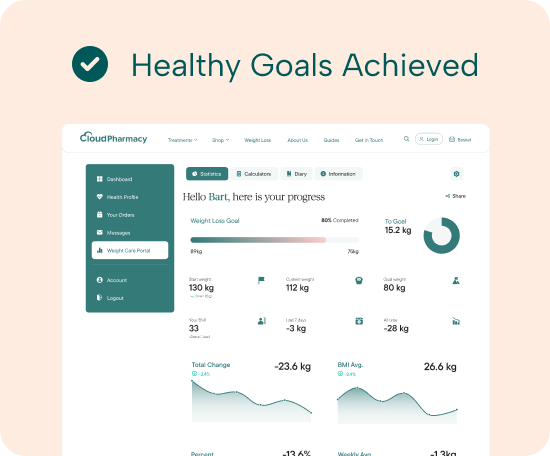
Step 4
Achieve your health goals
A personalised programme designed around you to deliver tangible, lasting outcomes